According to recent industry data, the global photobiomodulation therapy market was valued at approximately USD 249.5 million in 2024, reflecting rapidly increasing consumer interest in light-based wellness solutions (Vantage Market Research, 2024) [1]. As interest in Red Light Therapy for skin health, muscle support, energy enhancement, and general wellness grows, a key question continues to surface: Do different wavelengths produce different effects?
The short answer is yes, and understanding these differences is essential for anyone wanting to make informed decisions about their wellness routine. Red Light Therapy operates within a defined portion of the electromagnetic spectrum, where specific wavelengths interact with biological tissues in highly targeted ways. This interaction begins at the cellular level, where photons are absorbed by chromophores such as cytochrome c oxidase within the mitochondrial respiratory chain. Once absorbed, this light energy influences adenosine triphosphate (ATP) production, modulates reactive oxygen species (ROS), and supports cellular signaling pathways involved in regeneration and inflammation management.
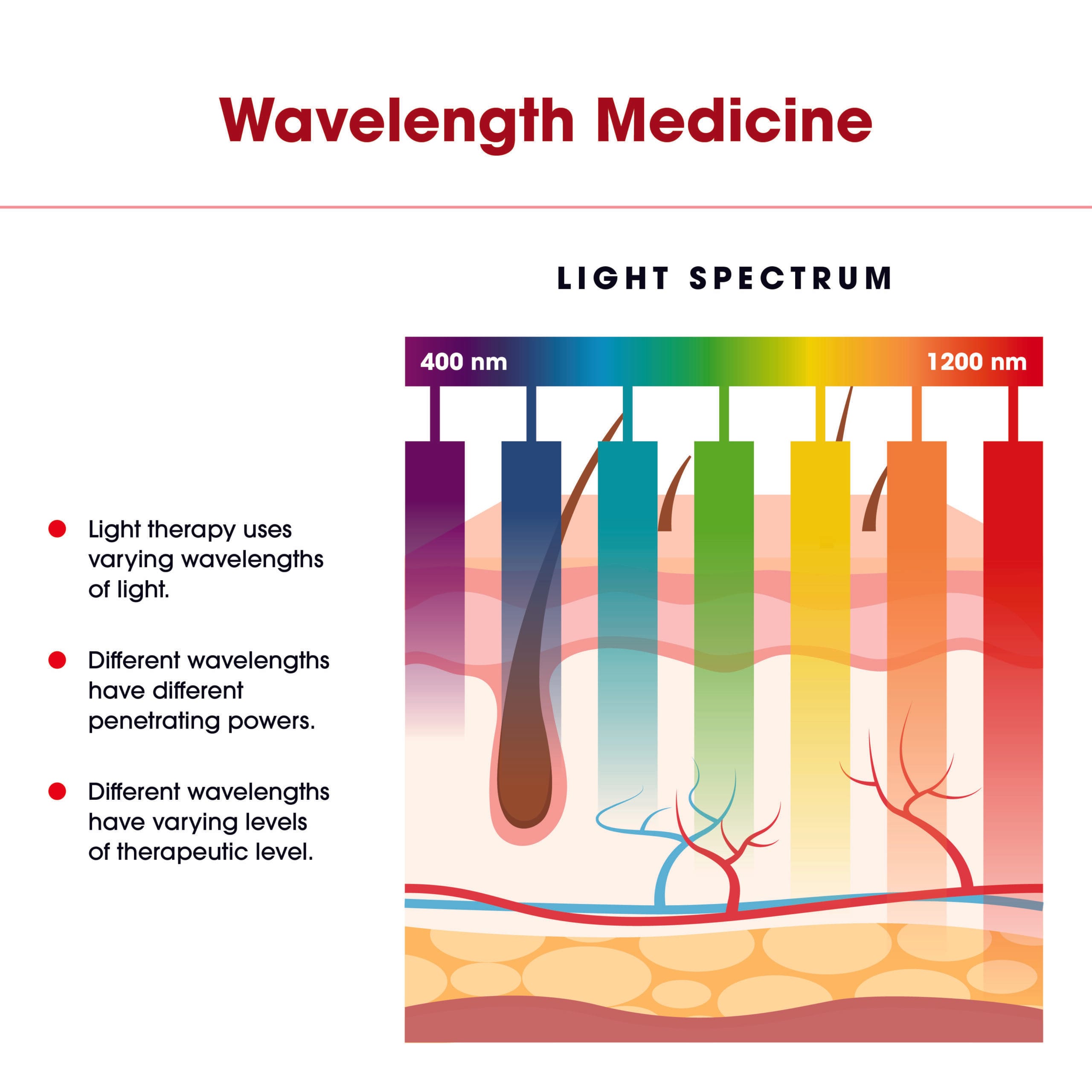
But not all wavelengths behave the same way. Some penetrate only surface-level tissues, while others reach deeper. These differences are determined by the unique optical properties of each wavelength, leading to distinct physiological outcomes. For example, visible red wavelengths tend to support dermal and epidermal processes, while near-infrared wavelengths extend much deeper.
In this article, we will explore the commonly used wavelengths in Red Light Therapy, explain how each interacts with the body, and clarify why selecting the appropriate wavelength is critical for achieving specific wellness goals. By understanding the science behind the spectrum, users can choose wavelengths with confidence and fully appreciate the precision behind light-based wellness
How Light Interacts with the Body: The Science Behind Wavelengths
Red Light Therapy begins with this simple concept. When specific wavelengths of light reach the body, they interact with cellular components that are designed to absorb and respond to light energy. The primary biological interaction occurs through photobiomodulation, a process in which photons influence cellular metabolism and signaling.
At the heart of this process is the mitochondrion, the cell’s energy center. Within the mitochondrial respiratory chain, a key chromophore, cytochrome c oxidase, plays a critical role in absorbing red and near-infrared light. When these photons reach cytochrome c oxidase, they can help displace nitric oxide (NO) that has temporarily bound to the enzyme, relieving an inhibitory effect. This allows oxygen to bind more efficiently, supporting enhanced electron transport, which ultimately increases the production of adenosine triphosphate (ATP), the molecule that fuels virtually every cellular function.
Light also modulates the production of reactive oxygen species (ROS) in controlled, beneficial ways. While excessive ROS can contribute to oxidative stress, small transient increases generated through photobiomodulation act as cellular messengers that support gene transcription, cellular repair pathways, and anti-inflammatory processes. This controlled modulation is one of the reasons why red light therapy can influence both immediate cellular activity and longer-term physiological responses.
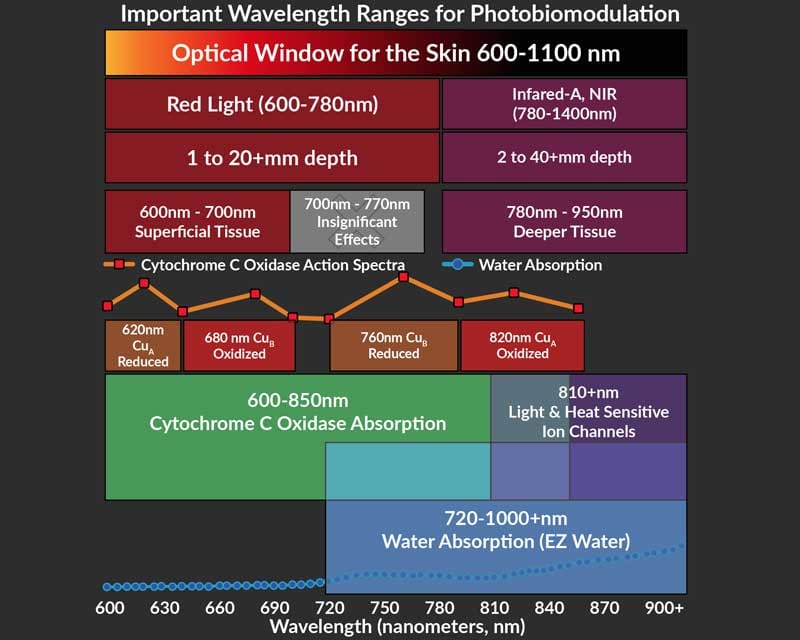
A key factor that determines the effect of Red Light Therapy is tissue penetration depth, which is highly dependent on wavelength. Shorter wavelengths in the visible red range primarily affect the skin and superficial tissues, where they support dermal regeneration and surface-level cellular health. Longer wavelengths in the near-infrared range penetrate much deeper, reaching muscles, connective tissue, joints, and in some cases even bone. This depth allows near-infrared wavelengths to influence systemic cellular energy production and the metabolic activity of deeper structures.
Because each wavelength interacts with tissue differently, the body experiences distinct outcomes depending on the specific point in the spectrum being used. This is why understanding wavelengths is essential: it allows individuals to align their wellness goals with the light that most effectively supports the cells involved. You can learn more about the clinical validation behind Red Light Therapy on our Science page.
Breakdown of Common Red Light Therapy Wavelengths:
While Red Light Therapy is often discussed as a single modality, the reality is far more nuanced. The spectrum used in wellness and photobiomodulation spans a range of specific, targeted wavelengths, each interacting with tissue in its own unique way. Understanding these wavelengths helps clarify why one may support skin vitality while another enhances muscle recovery or deeper cellular energy.
The most commonly utilized wavelengths in red light therapy include 630 nm, 660 nm, 810 nm, 830 nm, and 850 nm. These fall into two categories:
- Visible Red Light (630–660 nm)
- Near-Infrared (NIR) Light (810–850 nm)
Although all of these wavelengths influence mitochondrial activity and support ATP production through interaction with cytochrome c oxidase, their penetration depth, photon absorption behavior, and tissue-specific effects differ significantly.
Visible red wavelengths primarily engage epidermal and dermal layers, interacting with keratinocytes, fibroblasts, and superficial microvasculature. These interactions often lead to improvements in skin tone, surface-level inflammation, and overall dermal vitality.
Near-infrared wavelengths, by contrast, have far greater tissue penetration due to their longer photon wavelength and reduced scattering. This deeper reach allows NIR light to influence muscle tissue, connective structures, nerves, and vascular networks, modulating inflammation and supporting cellular metabolism in areas that visible red wavelengths simply cannot reach.
This section serves as the foundation for the wavelength-specific breakdowns that follow. By exploring each wavelength individually, we can better understand how the spectrum works as a precise tool, for supporting wellness and cellular efficiency.
630 nm: Surface-Level Cellular Activation
The 630 nm wavelength primarily interacts with the epidermis and upper dermal layers, where it supports keratinocyte activity, improves superficial microcirculation, and helps modulate visible inflammation. Its shallow penetration makes it ideal for surface-level skin wellness, calming irritation, and enhancing skin clarity. While deeper-tissue studies do not apply directly to this wavelength, its role in supporting superficial cellular signaling and local regenerative processes is well established within the visible red spectrum.
660 nm: Dermal Stimulation and Collagen Support
The 660 nm wavelength penetrates deeper into the dermal matrix than 630 nm, allowing it to reach fibroblasts, stimulate collagen synthesis, and modulate inflammatory signaling. Because of its strong interaction with cytochrome c oxidase, it enhances ATP production in skin cells and supports overall dermal vitality. This wavelength is well-regarded for visible skin enhancement, improved tone, and support for minor irritation, making it one of the most widely used visible-red options.
810 nm: Deep Tissue Mitochondrial Activation
As a near-infrared wavelength with excellent absorption properties, 810 nm reaches deep tissues, including muscle, nerve pathways, and reproductive structures. A clinical study demonstrated that “Laser irradiation at 810 nm through the FT-HP of human sperm significantly improves progressive motility”[3], highlighting this wavelength’s influence on mitochondrial energy output in deeper, highly metabolically active cells. Its strong absorption by cytochrome c oxidase also supports enhanced ATP generation, improved circulation, and modulation of deep-tissue inflammation, making 810 nm a key wavelength for systemic vitality and performance-related wellness.
830 nm: Neurological and Musculoskeletal Support
The 830 nm wavelength penetrates similarly to 810 nm but interacts with tissues in a way that strongly supports neuronal metabolism and musculoskeletal repair. It is particularly noted for assisting cellular communication within deeper structures and helping improve mitochondrial function in both nerve and connective tissues. Its ability to modulate nitric oxide and enhance oxygen availability makes it valuable for deeper recovery, mobility, and neurological support.
850 nm: Maximum Depth and Circulatory Influence
With one of the highest penetration depths in the near-infrared spectrum, 850 nm reaches into muscle fascia, connective structures, and even bone interfaces. It supports microvascular function, enhances oxygen consumption efficiency, and promotes ATP synthesis in deep tissues.
Additionally, while not specific to 850 nm, broader NIR research offers insight into this wavelength’s potential: a clinical report on a nearby wavelength concluded that “PBMT 1068 nm is indeed a viable therapeutic option against COVID-19 viral infection and its complications, including the cytokine storm, ARDS, and thrombosis.”[4].
Although 1068 nm is outside the standard wellness range, the study reinforces the unique systemic and immunomodulatory potential associated with deeper-penetrating near-infrared light, a category in which 850 nm plays a central role. Explore our Wavelength Benefits Guide to learn more about the therapy indicated for each condition.
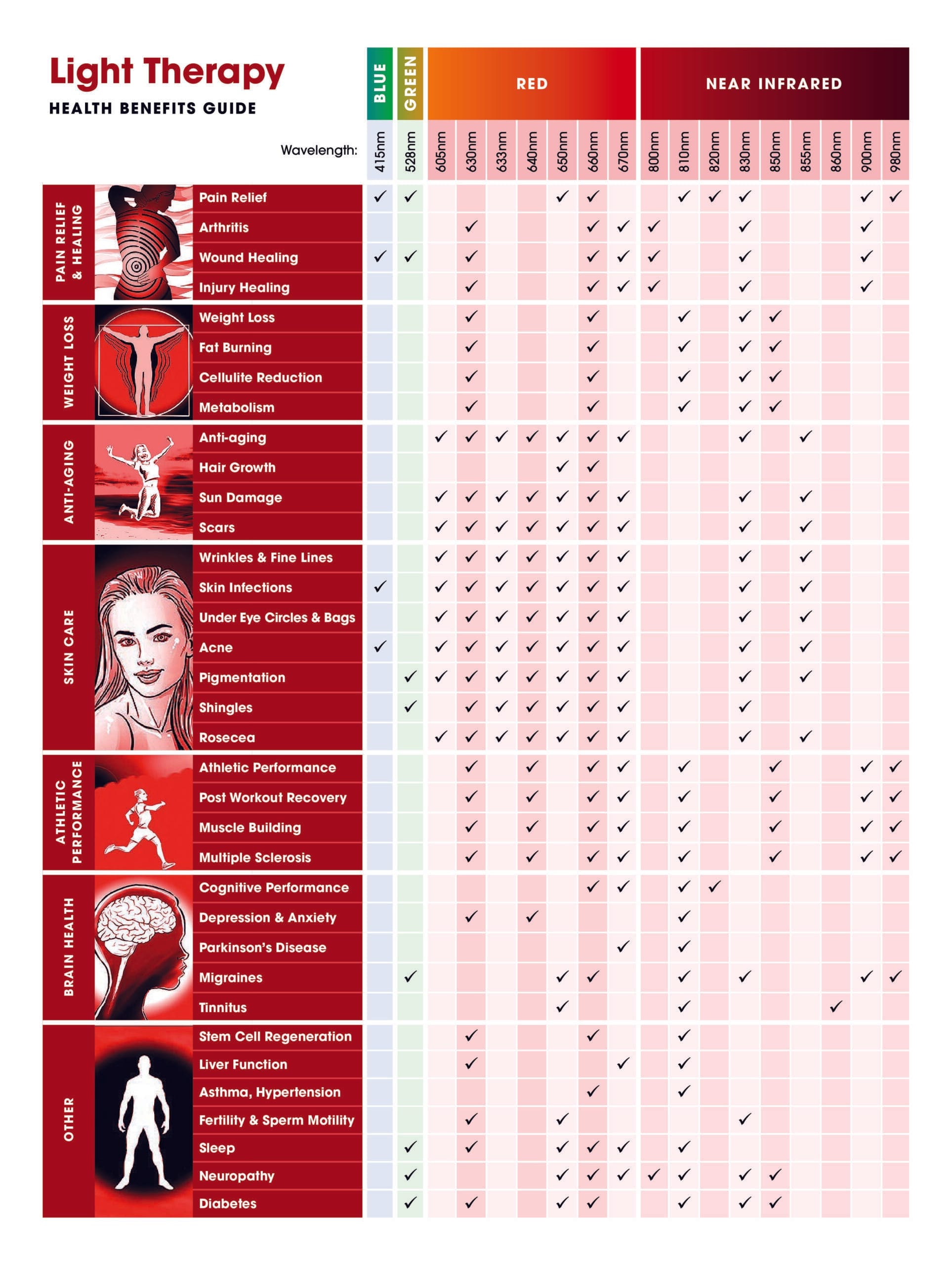
Comparing Red and Near-Infrared Wavelengths & Choosing the Right One for Your Goals
Red and Near-Infrared wavelengths share the same fundamental mechanism of photobiomodulation, yet their physiological effects differ significantly due to the depth at which each wavelength interacts with tissue. Red wavelengths primarily influence the skin’s surface and mid-dermal layers. These shorter wavelengths are readily absorbed by chromophores located in keratinocytes, fibroblasts, and superficial microvasculature, making them ideal for goals related to skin wellness, visible inflammation modulation, surface-level cellular rejuvenation, and collagen support. Because Red Light interacts with structural skin proteins and superficial circulation, which are most active, users often choose these wavelengths for complexion improvements, scar appearance support, and general skin vitality.
Near-Infrared wavelengths behave very differently. Their longer wavelength allows photons to scatter less and penetrate deeper into the body, reaching muscles, joints, connective tissue, nerves, and deeper vascular networks. This deep-tissue interaction makes NIR wavelengths highly suitable for musculoskeletal support, mobility, performance recovery, and systemic cellular energy enhancement. For example, 810 nm is well-documented for influencing mitochondrial metabolism in deeper tissues, while 830 nm and 850 nm are often selected for joint comfort, circulation support, and deeper cellular signaling related to inflammation modulation.
Choosing the best wavelength depends on individual goals and the depth of tissue one aims to influence. Many users benefit from combining multiple wavelengths, allowing visible Red Light to support surface-level processes while near-infrared wavelengths work deeper in the body simultaneously. Understanding these distinctions enables individuals to approach Red Light Therapy with greater precision, selecting wavelengths that align with their wellness goals and leveraging the spectrum in a more targeted, intentional way.
Red Light as a Precise and Targeted Wellness Tool
Red Light Therapy operates on a simple principle with highly precise implications: different wavelengths influence the body in different ways. As research continues to clarify how specific points in the red and near-infrared spectrum interact with tissue, it becomes increasingly clear that wavelength selection is not just a technical detail; it is a central part of achieving meaningful, targeted wellness outcomes. Red wavelengths offer powerful support for the skin and superficial cellular processes, helping enhance dermal vitality, calm visible inflammation, and stimulate collagen-related activity. Near-Infrared wavelengths, with their deeper penetration, support muscles, joints, nerve pathways, circulation, and overall mitochondrial function at a deeper systemic level.
Across the spectrum, each wavelength brings its own strengths, whether the goal is surface-level skin support, deeper musculoskeletal comfort, improved cellular energy, or enhanced recovery. Together, these wavelengths highlight the versatility of red light therapy as a biologically aligned, research-supported modality. As consumer interest grows and scientific understanding continues to evolve, the power of precise wavelength use becomes even more valuable, allowing you to choose light therapies intentionally and confidently, knowing exactly how the spectrum supports your body at every level.
References
[1]https://www.vantagemarketresearch.com/industry-report/photobiomodulation-market-4115?srsltid=AfmBOoqkIhJQNwKfG5LJsB6PKIDmynbxaoHLgC0MhKoCNbPzKeFcrCoD
[2]Li H, Yang W, Zhu B, Li M, Zhang X. Photobiomodulation therapy at 650 nm enhances osteogenic differentiation of osteoporotic bone marrow mesenchymal stem cells through modulating autophagy. Photodiagnosis Photodyn Ther. 2024 Dec;50:104389. doi: 10.1016/j.pdpdt.2024.104389. Epub 2024 Nov 1. PMID: 39489368.
[3]Stigliani S, Ravera S, Maccarini E, Rizzo C, Massarotti C, Anserini P, Bozzo M, Amaroli A, Scaruffi P. The power of 810 nm near-infrared photobiomodulation therapy for human asthenozoospermia. Sci Rep. 2024 Nov 5;14(1):26819. doi: 10.1038/s41598-024-77823-7. PMID: 39501019; PMCID: PMC11538380.
[4]Kitchen LC, Berman M, Halper J, Chazot P. Rationale for 1068 nm Photobiomodulation Therapy (PBMT) as a Novel, Non-Invasive Treatment for COVID-19 and Other Coronaviruses: Roles of NO and Hsp70. Int J Mol Sci. 2022 May 7;23(9):5221. doi: 10.3390/ijms23095221. PMID: 35563611; PMCID: PMC9105035.